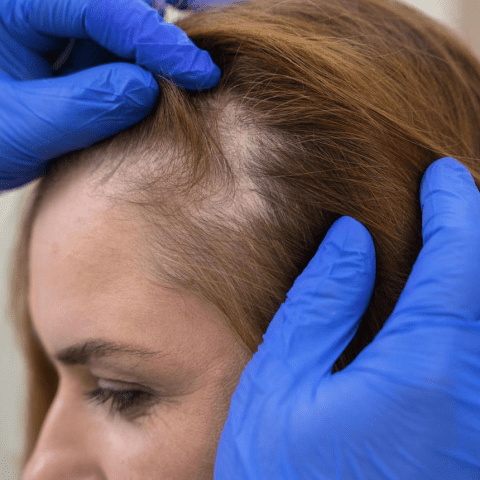
Hair Loss in Women: Understanding the Causes and How Modern Treatments Can Help
Hair loss in women is often more complex than it first appears. It rarely presents in a simple, predictable way, and in many cases it develops gradually, making it difficult to pinpoint when things started to change.
At Takroni Clinic in London, we often see women who have been quietly concerned for months or even years. They notice their parting widening, their ponytail feeling thinner, or increased shedding when washing or brushing. By the time they seek advice, there is often a mixture of causes at play rather than a single trigger.
Understanding what is driving hair loss is the first step. From there, modern regenerative treatments offer a much more refined and effective way of managing it than was available even a few years ago.
What causes hair loss in women?
Hair loss in women can stem from several overlapping factors. Unlike male pattern hair loss, which tends to follow a more defined pattern, female hair thinning is often diffuse and multifactorial.
Common causes include:
- Hormonal changes such as menopause, post-pregnancy shifts, or conditions like PCOS
- Genetic thinning known as female pattern hair loss
- Stress-related shedding (telogen effluvium), often triggered by illness, surgery or emotional stress
- Nutritional deficiencies, particularly iron, vitamin D or protein
- Scalp inflammation or poor scalp health
A common mistake patients make is assuming it is purely hormonal or purely stress-related. In reality, it is often a combination of several factors, which is why a single treatment approach rarely delivers meaningful results.
How do you know which type of hair loss you have?
This is where clinical assessment becomes essential. Hair loss is not something that can be accurately diagnosed from appearance alone.
We look closely at the pattern and speed of hair loss, alongside the condition of the scalp and any signs of inflammation. Medical history and lifestyle factors are also taken into account, and where appropriate, blood tests may be recommended.
We often find that what a patient assumed was temporary shedding is actually early-stage pattern thinning that has gone unrecognised. Getting this distinction right matters, because treatment pathways can differ significantly.
Can hair loss in women be reversed?
This depends on the underlying cause and how early treatment begins.
- Temporary shedding such as telogen effluvium often improves once the trigger is addressed
- Hormonal or genetic thinning can be stabilised and improved, but typically requires ongoing management
- Long-standing follicle inactivity is more difficult to reverse, which is why early intervention tends to give the best outcomes
What is encouraging is that modern regenerative treatments now allow us to stimulate dormant follicles and improve scalp health in a way that was not previously possible.
What are the most effective treatments for hair loss in women?
Treatment has moved away from a one-size-fits-all approach. Instead, we now use tailored medical hair restoration protocols that combine regenerative therapies depending on the patient’s needs.
PRP for hair loss: How does it work?
PRP for hair loss (Platelet-Rich Plasma) is an established regenerative treatment. It involves taking a small sample of your blood, processing it to concentrate growth factors, and injecting it into the scalp.
These growth factors help to:
- Stimulate dormant hair follicles
- Improve blood supply to the scalp
- Extend the hair growth cycle
- Strengthen existing hair strands
At Takroni Clinic, we often use PRP as a foundation treatment, particularly in early to moderate hair thinning.
For milder cases, PRP alone may be sufficient. However, if that is not settling or results plateau, we would normally look at combining it with more advanced regenerative options.
Exosomes: A more advanced regenerative approach
Exosomes represent a newer and more advanced development in hair restoration.
They are cell-derived signalling particles that play a key role in communication between cells. When applied to the scalp, they help to:
- Reduce inflammation
- Stimulate follicle activity
- Enhance tissue repair
- Improve overall scalp health
What happens in more resistant cases is that the scalp environment itself becomes less supportive of hair growth. Exosomes can help reset that environment. We often use exosomes in patients who have not responded fully to PRP, in cases of more advanced thinning, and as part of combination protocols where a more enhanced regenerative response is needed.
Polynucleotides: Supporting scalp regeneration
Polynucleotides are another regenerative treatment increasingly used in hair restoration. They work differently to PRP and exosomes. Rather than directly stimulating follicles, they focus on:
- Improving tissue repair at a cellular level
- Enhancing hydration within the scalp
- Reducing inflammation
- Supporting long-term scalp health
Polynucleotides are particularly useful where the scalp shows signs of irritation, dryness, or compromised barrier function.
For patients with sensitive scalps or early-stage thinning, they can be an excellent starting point or a supportive addition to other treatments.
How long does it take to see results?
Hair growth is slow, which is something patients often underestimate.
Typically:
- Early improvements in shedding may be seen within 6 to 8 weeks
- Noticeable thickening can take 3 to 6 months
- Full results often develop over 6 to 12 months
Consistency is key. Hair restoration is rarely a one-off treatment. It is usually a structured plan with maintenance over time.
What should you do if you are noticing hair loss?
If you are starting to notice changes, it is worth addressing them sooner rather than later. In clinic, the earlier we see patients, the more options we have and the better the outcomes tend to be.
A consultation allows us to identify the underlying cause of your hair loss, assess the condition of your scalp, and build a personalised treatment plan. From there, we can determine which combination of treatments is most appropriate for your specific presentation.
At Takroni Clinic in London, this process is always approached in a structured, medically led way rather than moving straight into treatment.
FAQs: Hair loss in women
Is hair loss in women permanent?
Not always. Some forms, such as stress-related shedding, are temporary. Others, like genetic thinning, can be managed and improved but usually require ongoing treatment.
Does PRP for hair loss actually work?
In clinical practice, PRP can be very effective, particularly in early-stage hair thinning. Results are usually best when it is part of a broader treatment plan rather than used in isolation.
Are exosomes better than PRP?
They are not directly comparable. PRP and exosomes work in different ways. In many cases, combining them produces better outcomes than choosing one over the other.
What are polynucleotides used for in hair loss?
Polynucleotides help improve scalp health and support tissue repair. They are often used alongside other treatments to create a healthier environment for hair growth.
How many sessions will I need?
This varies depending on the severity of hair loss. Most patients require an initial course of treatments followed by maintenance sessions.
Considering treatment for hair loss in London
Hair loss in women is rarely straightforward, but it is increasingly treatable with the right approach.
The key is understanding what is driving the issue and selecting treatments accordingly. We often find the best results come from combining regenerative therapies in a way that reflects the individual patient rather than relying on a single solution.
If you are concerned about hair thinning or increased shedding, book a consultation at Takroni Clinic in London.
We will guide you through the most appropriate medical hair restoration protocols, including PRP, exosomes, and polynucleotides, based on your individual needs and goals.