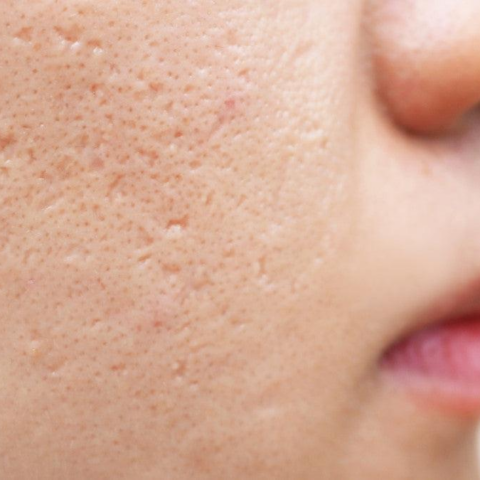
Skin texture is one of those concerns that can be difficult to define. You might notice that make-up no longer sits as smoothly, pores look more visible across the cheeks and nose, or old acne scars become more obvious in certain lighting. In other cases, the skin simply looks rough or uneven despite a consistent skincare routine.
So, can you actually improve skin texture? In many cases, yes. But the first step is understanding what is making the skin look uneven.
At Takroni Clinic in Fitzrovia, London, we often see several factors contributing at the same time. Someone may have enlarged pores alongside congestion and early sun damage. Another person may describe their concern as acne scarring when much of what they can see is actually redness or pigmentation left behind after breakouts.
These differences matter because there is no single treatment for uneven skin texture. The right approach depends on whether the problem sits mainly at the surface, involves pigmentation or redness, or reflects deeper structural changes such as acne scarring and collagen loss.
What Causes Uneven Skin Texture?
Perfectly smooth, poreless skin does not exist. Pores, fine lines and small variations across the surface are part of normal skin anatomy.
Texture tends to become more noticeable when these natural variations are exaggerated. This can happen because of:
- Enlarged or congested pores
- Acne and acne scarring
- A build-up of dead skin cells
- Sun damage
- Uneven pigmentation
- Fine lines
- Reduced collagen and elastin
- Previous inflammation
Age can also change the way existing texture looks. As collagen and elasticity gradually decline, the support around pores and old scars becomes less robust, making them appear more noticeable.
The depth of the problem is particularly important. Surface roughness caused by dead skin cells is very different from an indented acne scar where the structure of the dermis has changed. This is why understanding the cause of uneven texture needs to come before choosing a treatment.
What Are Pores and Can You Reduce Their Appearance?
Pores are tiny openings in the skin associated with hair follicles and sebaceous glands, allowing natural oils to reach the skin’s surface. They are a normal part of healthy skin and cannot be permanently closed or removed.
What can change is how visible they appear. Genetics and oil production influence pore size, while congestion can make pores look more prominent. Over time, sun damage and declining collagen can also reduce the support around them, making the openings appear larger.
Treatment therefore depends on why the pores are noticeable. If congestion is contributing, we often recommend starting with HydraFacial alongside medical-grade skincare to help clear blocked pores, manage excess oil and maintain results. A superficial peel such as Obagi Blue Peel Radiance may also be recommended to remove accumulated surface cells and improve skin texture.
Where enlarged pores are associated with changes in skin texture or collagen loss, fractional laser treatments such as Clear + Brilliant and MOXI Tribrid can help improve skin texture and reduce the appearance of pores. Both use a 1927 nm wavelength, but MOXI Tribrid, (aka Super MOXI), can deliver up to 40 J compared with Clear + Brilliant’s 5 J. This allows for more intensive treatment and potentially greater improvement per session, making MOXI Tribrid a suitable option when more noticeable correction is needed.
The realistic aim is not poreless skin, as pores are completely natural, but to make pores less prominent and the surrounding skin appear smoother and more refined.
What Is the Difference Between Acne Marks and Acne Scars?
Although the terms are sometimes used interchangeably, acne marks and acne scars are not the same. After a spot has healed, it may leave behind redness or increased pigmentation. These marks can persist for months, but the physical structure of the skin may still be relatively smooth.
A true acne scar involves a change in the structure of the skin itself. Atrophic scars, for example, form depressions because collagen has been damaged during the inflammatory process and the skin has healed with less tissue in that area.
You can sometimes see the distinction more clearly by looking at the skin from different angles. Pigmentation changes colour but does not necessarily alter the surface. An indented scar creates shadows and changes in contour, which is why acne scarring can appear much more pronounced in overhead or side lighting.
This distinction is important because a treatment designed primarily to improve pigmentation will not necessarily remodel an indented scar, while resurfacing alone may not fully address persistent redness or brown marks.
Which Treatments Can Improve Acne Scarring and Uneven Texture?
Treatment depends largely on the depth and type of textural change.
For mild textural irregularity or early acne scarring, medical microneedling may be appropriate. At Takroni Clinic, SkinPen is used to create controlled microchannels within the skin, triggering a repair response and stimulating collagen and elastin production.
The change is gradual rather than immediate. As collagen remodels over a course of treatment, the skin can become smoother and shallow scars may appear softened. Microneedling can also be useful where enlarged pores and general skin quality are part of the same concern.
Fractional laser treatment also creates controlled areas of treatment to encourage skin renewal, although it uses laser energy rather than needles.
For relatively mild texture, pores and early signs of sun damage, Clear + Brilliant offers a gentler approach. MOXI Tribrid can provide more intensive fractional renewal where greater correction of texture, pores or pigmentation is required.
For more established textural change, acne scarring or a combination of concerns at different levels of the skin, HALO Tribrid may be considered. Its three wavelengths allow treatment to be adjusted according to what is present rather than applying the same depth of resurfacing to every patient.
NanoLaserPeel works more like a highly precise chemical peel, removing superficial layers of damaged skin to improve overall texture, smoothness and radiance. While it is not our first choice for enlarged pores, it can be a useful maintenance treatment for keeping the skin looking fresh, smooth and even.
These treatments should not simply be viewed as a scale from weakest to strongest. They work at different depths and in different ways, so the appropriate choice depends on the type and extent of the textural change.
For patients with atrophic acne scarring, where small depressions have formed in the skin, carefully placed amounts of dermal filler may also be considered. This can help lift selected depressed scars and create a smoother, more even skin surface, although suitability depends on the type and depth of scarring.
Can Pigmentation and Redness Make Skin Look Uneven?
Yes. Not all uneven-looking skin is caused by changes in physical texture.
This is particularly relevant after acne. Someone may have relatively little permanent scarring but still feel that their complexion looks uneven because of persistent red or brown marks. Sun damage can create a similar effect through freckles, sun spots and areas of irregular pigmentation.
In these cases, improving colour may make as much difference to the overall appearance of the skin as resurfacing it.
BBL HEROic uses BroadBand Light to target concerns including pigmentation, sun damage and redness. Where both colour and physical texture need addressing, it may be combined with fractional resurfacing such as MOXI Tribrid.
The two treatments have different roles. BBL targets unwanted colour, while MOXI focuses more directly on fractional renewal, pores and texture.
What someone describes as “uneven texture” may therefore be a mixture of pores, pigmentation, redness and scarring. Identifying which features are present helps determine what actually needs treating.
How Do You Choose the Right Treatment for Uneven Skin Texture?
The right approach depends on what is causing the uneven texture, how established it is and whether several concerns are present together. Skin tone, sensitivity, active acne, pigmentation, scar type and acceptable downtime can all influence the decision.
For mild congestion or surface roughness, skincare or peeling may be enough. More noticeable pores and textural changes may benefit from fractional laser or microneedling, while established acne scarring or photodamage may require more intensive resurfacing.
Sometimes treatments are combined because they address different aspects of the skin. BBL HEROic and MOXI Tribrid, for example, can target pigmentation or redness alongside texture and pores. In other cases, sequencing makes more sense. Active acne may be treated first, followed by microneedling or laser resurfacing for residual scarring.
Results also develop at different rates. Surface texture may improve relatively quickly, whereas acne scars require gradual collagen remodelling and often a course of treatment. The aim is improvement rather than completely poreless or scar-free skin, with the level of treatment matched to what your skin actually needs.
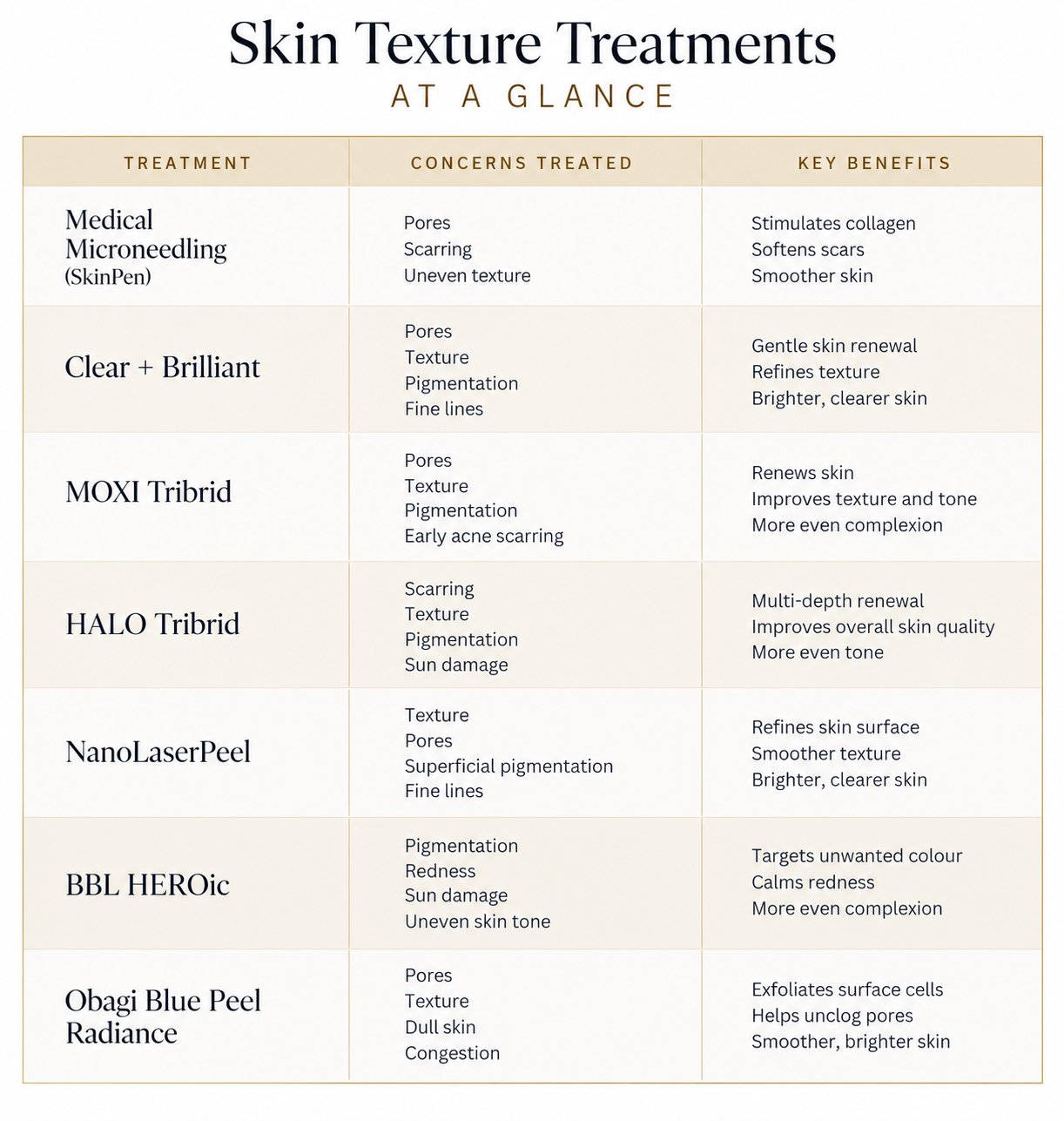
Frequently Asked Questions About Uneven Skin Texture
Does Drinking More Water Improve Skin Texture?
Good hydration is important for normal skin function, but drinking additional water will not remodel acne scars or permanently reduce enlarged pores. Dehydrated skin may look duller and emphasise fine surface lines, so hydration can still affect how smooth the skin appears.
Can Retinol Improve Skin Texture?
Retinoids can support cell turnover and collagen production and may help with uneven tone, congestion and fine textural changes. They can be useful as part of a longer-term skincare plan, although more established scarring may require procedural treatment.
Can You Improve Skin Texture Without Downtime?
There are lower-downtime options, but there is usually a relationship between the degree of correction required and the intensity of treatment. Mild concerns may respond to gentler approaches, while deeper scarring may require some recovery time to achieve meaningful remodelling.
Does Acne Scarring Become More Noticeable With Age?
It can. The scar itself does not necessarily become deeper, but declining collagen, changes in facial volume and reduced skin elasticity can make existing scars appear more noticeable over time.
Are Improvements in Skin Texture Permanent?
Some structural improvements, such as collagen remodelling within acne scars, can be long lasting. However, skin continues to age and remains affected by sun exposure, acne and other factors, so maintaining good skin health remains important after treatment.
Can You Improve Skin Texture?
Skin texture is not one single concern. Visible pores may be influenced by congestion or collagen loss. Acne can leave behind pigmentation, redness, true scarring or a combination of all three. Roughness may sit close to the surface, while established scars extend deeper into the skin.
Understanding which of these changes is present makes it possible to choose a more appropriate approach rather than treating every form of uneven skin in the same way.
If you are concerned about enlarged pores, acne scarring or persistently uneven skin, a skin consultation can help establish what is contributing before deciding whether skincare, microneedling, peeling, light-based treatment or laser resurfacing is appropriate.
Takroni Clinic is based on New Cavendish Street in Fitzrovia, central London, within easy reach of Marylebone, Soho, Mayfair and surrounding areas. You can book a skin consultation if you would like your concerns assessed and a treatment plan tailored to the condition of your skin.

